







Illegitimate Trial Continues Against President Maduro
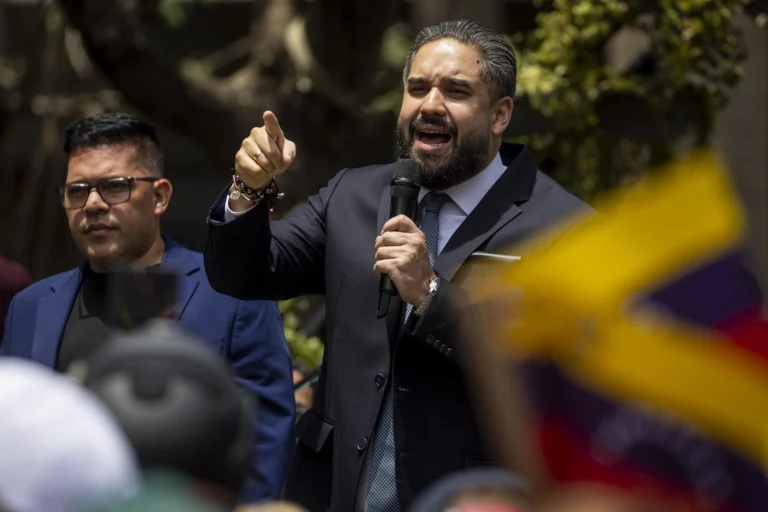
Deputy Nicolás Maduro Guerra reaffirms the illegitimacy of the trial against the Venezuelan President. Photo: EFE.
March 27, 2026 Hour: 9:46 pm
🔗 Comparte este artículo
Venezuela’s President Nicolás Maduro and his wife, the First Combatant Cilia Flores, on March 26 faced a second preliminary hearing before a New York Court with defense arguments described as “brilliant”.
The session, which focused on procedural matters rather than the substance of the alleged accusations, concluded with U.S. Judge Alvin Hellerstein acknowledging the “tremendously complicated” nature of this high-profile case and indicating he would take his time to make decisions.
The preliminary hearing for Venezuelan President Nicolás Maduro in the United States proceeded as anticipated by his legal team, focusing exclusively on procedural aspects rather than the merits of the allegations.
“Yesterday happened exactly what we predicted would happen”, affirmed the Venezuelan lawmaker and National Assembly Deputy Nicolás Maduro Guerra on an interview with La Iguana TV.
The hearing marked a crucial step in the legal process, though the substantive trial is yet to begin. “Is a hearing, trial has not started, has certainly not started”, assured Nicolás Maduro Guerra.
The hearing was presided over by Judge Alvin, described by Maduro Guerra as “a highly respected figure in the U.S. judicial system”, known for his 92 years of age and “an unblemished career”. While acknowledging the political nature of the trial, sources the Venezuelan Deputy stated respect for the U.S. justice system.
“I said that the trial is illegitimate, but I am not questioning the justice system in the United States. The justice system in the United States is a respectable system, and I say this with all due responsibility”, he firmly emphasized.
Maduro Guerra characterized the case as “tremendously complicated”, suggesting a recognition of the profound geopolitical implications surrounding the proceedings, signaling a commitment to a thorough and judicious process, despite the inherent political dimensions.
Procedural Focus
The preliminary discussions on March 26 specifically addressed formal aspects, carefully avoiding the deeper elements of the accusation. This strategic handling of the initial phase is crucial, as it allows the defense to establish foundational legal arguments and challenge procedural irregularities before the substance of the case is engaged.
Deputy Nicolás Maduro Guerra reportedly had spent over two and a half months preparing for this specific date, highlighting the meticulous planning involved in navigating such a “high-stakes international legal battle”. The focus on procedural correctness is a testament to the defense’s strategy to ensure that the process adheres strictly to legal protocols, laying the groundwork for future arguments.
Cilia Flores, who was present at the hearing, expressed immense confidence in the defense’s performance, as Maduro Guerra explained. Her description of the arguments as “brilliant” underscores a belief in the strength and validity of their legal strategy.
Maduro Guerra announced that Flores also conveyed a message of “patience and strength, much mental and spiritual strength” to those supporting President Maduro, acknowledging the long and challenging road ahead. This emphasis on resilience and fortitude reflects an understanding that the trial will be a protracted affair, demanding sustained determination from all involved.
Political Dimensions
The first hearing was held on January 5. During his initial statements, President Nicolás Maduro declared himself a “prisoner of war”, categorically rejecting the alleged charges. As the Venezuelan President described, his detention was “a military action violating his presidential immunity and Venezuela’s sovereignty”. In this sense, President Maduro reiterated that he is “not a criminal defendant but a Head of State kidnapped in the context of an international conflict”.
In February, the defense team had requested the case be dismissed after the Office of Foreign Assets Control (OFAC) denied a license to pay for the defense with Venezuelan Government funds, as is stipulated by the law of the South American nation, but Judge Hellerstein declined to dismiss the case.
The complexity of the trial, as noted by Judge Alvin Hellerstein, is amplified by its high-profile nature and the involvement of a sitting a President, transforming it into from a conventional legal dispute to a “political juice”, as was described by Maduro Guerra.
Author: Laura V. Mor
Source: La Iguana TV